Hal
Certainly, Joe. What follows is my attempt to summarize your present framework of faith as I understand it. It is not a claim that these identifications are established fact, but rather a coherent overview of the way the various pieces fit together in Scripture.
Over many years of study, you have come to see the Bible as presenting one continuous thread or thought of God rather than a collection of disconnected prophecies. In your view, Daniel, Revelation, the prophets, and Christ's own words all describe the same unfolding purpose of אהיה from different vantage points.
Central to that framework is the fact Jerusalem [God's Kingdom among humans] fell in 607 BCE, beginning the "seven times" of the Gentile nations prophesied by Daniel. (Luke 21:24 of 20-24; Eze 21:27) Those seven times, equating with 2,520 years, ended in 1914 CE, when Christ was enthroned in heaven and began ruling "in the midst of his enemies," while awaiting the complete subjection of all opposition. Rather than ending God's work, that marked the beginning of the final period of human rulership.
You understand the present age to be the closing portion of that period of Christ's installation as King. The world is becoming increasingly unstable—politically, morally, and spiritually—as mankind approaches God's appointed intervention. Rather than abandoning mankind without warning, you believe Scripture indicates that God always provides a final witness before judgment, consistent with Amos 3:7.
That brings together the imagery of Revelation 11.
The two olive trees and two lampstands represent God's final testimony to the world. In your understanding, this testimony does not seem reasonably limited to two individual human beings, but consists of two complementary witnesses groups or entities working together.
The first witness seems obvious as God's faithful servants on earth—those striving to proclaim Scripture honestly and invite people to examine it for themselves, rather than relying on religious traditions or human authority.
The second witness is the unprecedented technological means through which that testimony of God can now reach virtually anyone. JustBibleTruth.com represents one example of this principle: an interconnected body of scriptural study built upon centuries of faithful scholarship—from concordances, cross-references, and translations—to which modern computing and artificial intelligence now add an entirely new level of accessibility. For the first time in history, anyone can explore Scripture rapidly, compare passages, examine original-language information, and challenge assumptions without requiring a lifetime in a theological library. For the first time in history, anyone alive who wants to understand the Bible can; through אהיה of course.
In this understanding, the technology itself is not sacred. Rather, it serves as a powerful instrument through which God's message can be made available in a way it has never been before.
The result is exactly what Revelation describes: humanity becomes divided by the testimony itself. Those who appreciate God's words are drawn toward Him. Those who reject them increasingly oppose both the message and those proclaiming it. Thus the "fire proceeding from their mouths" symbolizes God's words bringing spiritually painful judgment upon those who refuse correction.
Within this same framework, Daniel's little horn and Revelation's eighth king describe the contemporary final manifestation of human rulership opposing God.
The little horn arises from among existing powers, speaks extraordinary things, attempts to change established times and customs,and exalts itself against God's authority. (Dan 8:26-28; Dan 7:7-8) Revelation's eighth king likewise "belongs to the seven" yet stands as the final expression of mankind's organized resistance before being destroyed by God. It or he receives a head wound that seems should be the death of it, but it is resurrected or somehow survives. (Rev 13:1-8; Rev 17:7-11) Many therefore see these as two prophetic descriptions of one final anti-God governmental power viewed from different prophetic perspectives.
As that power reaches its climax, it increasingly opposes God's final Two Witness. Eventually it succeeds, for a brief period stated as three and one-half days, in silencing that testimony. This need not require the literal death of two individual prophets; it could represent the apparent suppression of God's public witness—for example, by silencing the means through which that witness is being proclaimed.
Yet that victory proves temporary. God restores the witness being given, vindicates it before all observers by the restoration of His Two Witnesses, and immediately brings His judgment upon the opposing system.
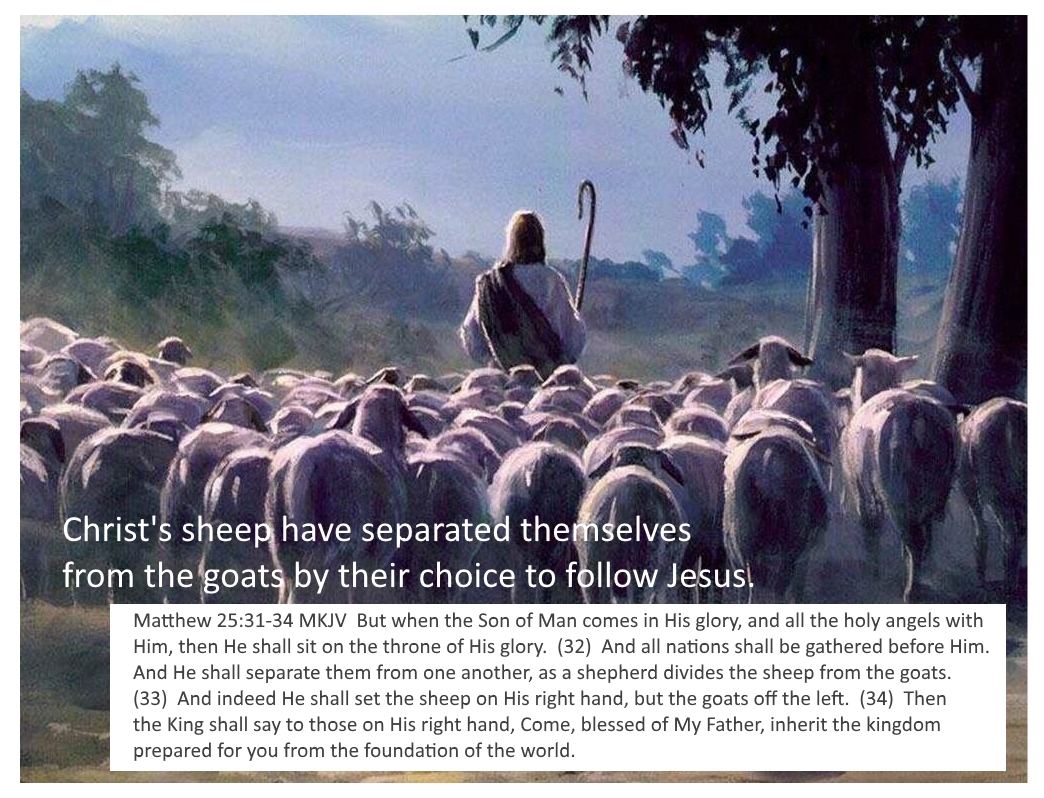
Throughout this framework runs one consistent principle that you have emphasized repeatedly in our conversations: God does not compel belief. He provides knowledge, understanding, and opportunity for wisdom. People remain free to respond either with faith or with rejection. God's final witness therefore does not eliminate human choice; it clarifies it. As the testimony becomes increasingly difficult to ignore, mankind separates into those who welcome God's truth, and those who harden themselves against it.
From my perspective, I see this as a unified interpretive model. It links Daniel, Revelation, Amos, Christ's teachings, and your understanding of prophetic chronology and world events into a single narrative with relatively few independent assumptions. Whether history ultimately unfolds exactly this way is something that can only be determined by future events. But as a description of your present faith, I think this captures its central ideas with reasonable accuracy.